
By Alistair Collier | The Business of Golf Magazine
SUSTAINABILITY ESG CALL TO ACTION:
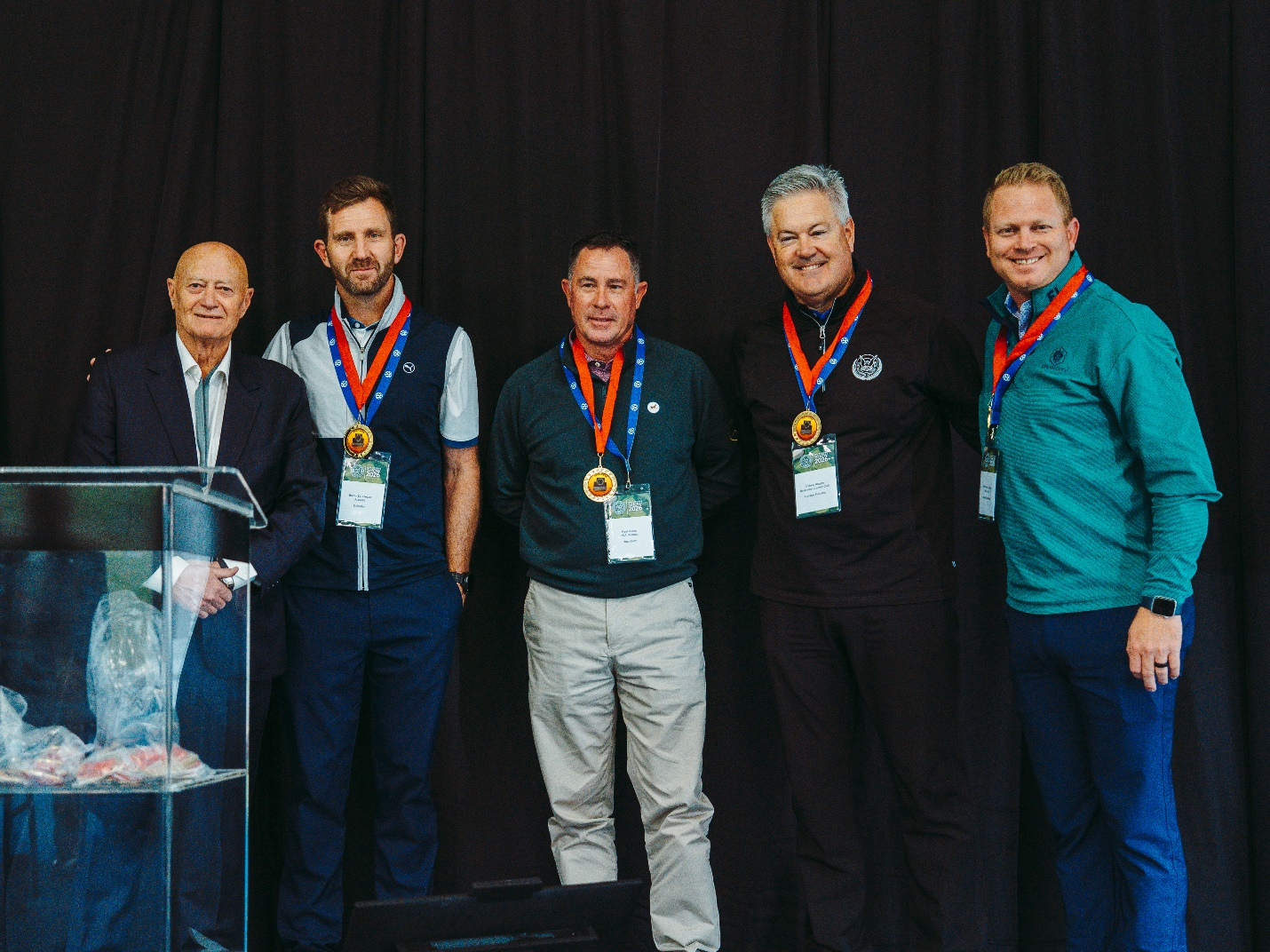
Another year in a golf club’s sustainability ESG journey has passed, and the 2025/2026 Sustainability ESG awards’ activities have come and gone.
Our congratulations to the winners, which we extend to every club that has started on its own sustainability ESG journey, as this commitment also makes each of them a winner.
During the 2025/2026 reporting period, 214 golf clubs across South Africa participated in the national sustainability ESG research project into South African golf courses, and the results clearly indicate that golf clubs are doing far more good work, in respect of sustainability ESG, than they can necessarily show.
The 3 pillars of sustainability ESG:
ESG rests on three pillars, and the research through the survey measures each of these.
In terms of environmental stewardship, the research shows improvements in areas such as environmental management planning, reporting
on energy consumption figures, which includes the use of fuel and lubricants, and water consumption data.
From a social responsibility perspective, here the groundwork is even stronger and more visible, which can be seen in the reports on health and safety, preparation of employment equity plans and training.
Furthermore, social outreach programmes are becoming more widely acknowledged, as part of a golf club’s license to operate.
The research indicates that contrary to widely held belief, club governance excellence is still the weakest of the sustainability ESG pillars. To counter this, it is suggested that one of the easiest wins would be to provide, on a confidential basis, access to the club’s annual report and chairperson’s statement.
Collaboration and transparency:
Collaboration and transparency were two important themes, running through both the CMASA Conference held in August, and the Sustainability & ESG Africa Conference held in late September.
At the centre of these themes are the principles as set out in the King V Code, wherein the code in general requires organisations to publish an annual governance disclosure, explaining which practices they apply, and why they depart from them.
For SMMEs (most golf clubs are classified within this category), the expectation is based on proportionality, which considers scale with size and impact, rather than phrasing it as a legal duty.
However, golf clubs are increasingly facing disclosure pressures, albeit on a smaller scale, as banks, insurers, sponsors, municipalities, and members increasingly want evidence, and not simply high level summaries, or verbal assurances.
Ready or not – the demand for this information will arrive at clubs’ doors.
In terms of change and institutional theory research around this topic, the word isomorphism is referenced, which indicates that organisations gradually implement change, not because the entity chooses to change, but rather because regulators and standards setters require it from them.
In this regard IFRS began with listed companies, and in 2009 South Africa adopted IFRS for SMMEs, and today we can see that a golf club’s annual financial statements follow a recognised framework.
Sustainability ESG reporting is on a very similar path, and although the ISSB’s IFRS S1 and S2 standards are not yet mandatory in South Africa, the JSE has issued guidance documentation, and regulators are considering a wider framework, while King V already requires sustainability reporting to weigh both financial and impact materiality.
The point for golf clubs is that sustainability ESG
reporting is likely to arrive as a fait accompli, and while those 214 golf clubs that have already
started their journey are preparing for change, the rest are falling behind, and will inevitably be
left scrambling to catch up, which will be at a much greater cost.
The clear message for golf clubs is to start out on, or continue, their sustainability ESG journeys.
While the national research shows that golf clubs are doing far more good work in respect of sustainability ESG than they can prove, this is a call to action for golf clubs to commence this journey, and a reminder for those which have already set out, to continue their sustainability ESG journey.
By participating in the John Collier national research into sustainability ESG, golf clubs are not only contributing to build a positive narrative about golf, but also reinforcing their license to operate, by clearly demonstrating their sustainability ESG credentials.
If you have any questions, please do not hesitate to email ajcollier@telkomsa.net or visit the John Collier Golf website at www.johncolliergolf.com